


The Middle Corridor (Trans-Caspian International Transport Route) is a land–sea route running from China to Kazakhstan, across the Caspian Sea to Azerbaijan, and on to Georgia and Turkey. It stands out as an alternative to the northern route through Russia and to the sea route through Suez.
Figures for 2025 and 2026
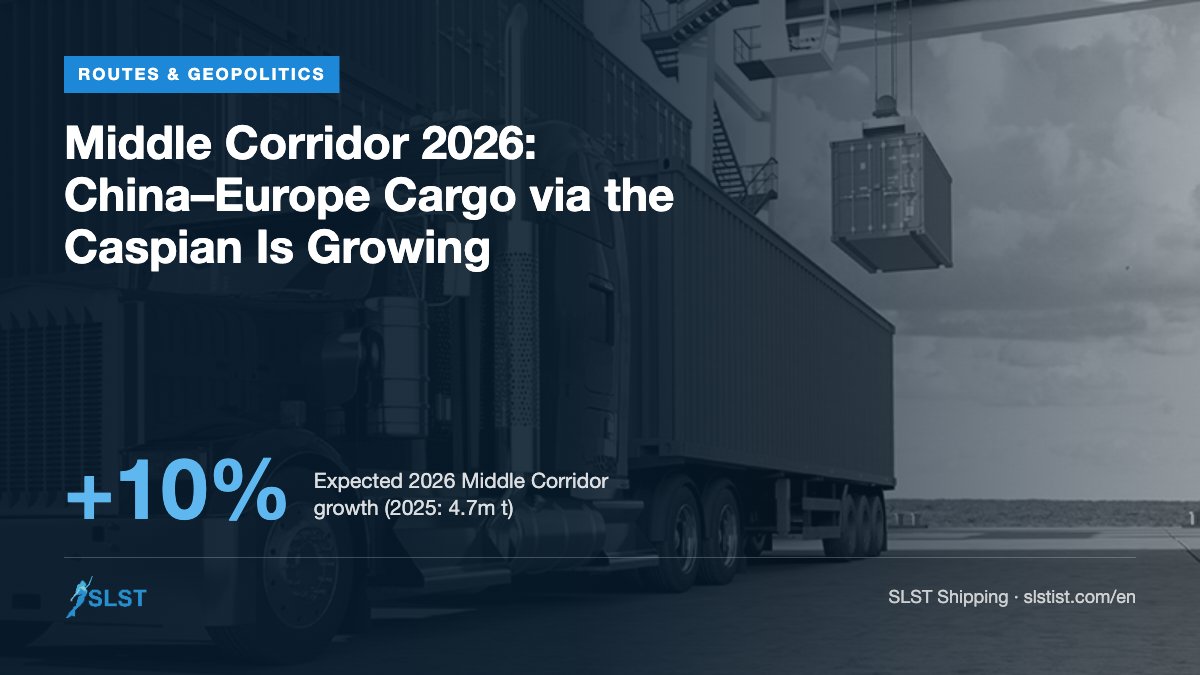
- According to Kubanychbek Omuraliev, Secretary General of the Organization of Turkic States (OTS), 4.7 million tonnes of cargo moved on the Middle Corridor in 2025. Traffic is expected to grow by about 10% in 2026.
- Azerbaijan’s Ministry of Transport expects total transit cargo through Azerbaijan to exceed 16 million tonnes in 2026, of which 5.5 million tonnes would pass through the Middle Corridor.
- January–July 2026: Total transit cargo through Azerbaijan exceeded 9.1 million tonnes, up 11.6% on the same period of 2025.
- First half of 2026: Transit cargo carried by Azerbaijan Railways reached 3.625 million tonnes (+9%). The east–west Middle Corridor part was 1.958 million tonnes (+12%).
Note: these figures come from different institutions and use different definitions. For example, the OTS figure of 4.7 million tonnes and Azerbaijan’s 5.5 million tonne forecast should not be compared directly.
Infrastructure: bottlenecks and investment
- Baku–Tbilisi–Kars (BTK) railway: The line linking Turkey to Azerbaijan via Georgia has an annual capacity of about 5 million tonnes.
- Port of Baku: Capacity is planned to rise from 15 million to 25 million tonnes.
The Caspian crossing remains the most sensitive link of the corridor because of vessel capacity and weather. The number of transshipment points directly affects transit time and cost.
Turkey’s role
Turkey is one of the places where the Middle Corridor connects to Europe. Cargo can reach Turkey and Europe by rail via Kars or by sea from Georgia’s Black Sea ports. Turkey’s Marmara and Black Sea ports can form part of the sea leg of this connection.
Who is it suitable for?
The Middle Corridor can be considered for cargo looking for an option faster than sea freight but cheaper than air freight. It is not suitable for every shipment: the number of transshipments, customs procedures and capacity limits must be taken into account. A comparative cost and time calculation against sea freight is the soundest approach.
Frequently asked questions
How long does cargo take from China to Turkey via the Middle Corridor?
It depends on the loading point, the number of transshipments and waiting time at the Caspian crossing. Ask a carrier for an up-to-date transit time.
Is the Middle Corridor an alternative to Suez?
Partly. Its capacity is very small compared with sea freight, but it offers speed and route diversity for certain cargo.
Sources
- Report.az: Omuraliev – Freight volume on Middle Corridor to rise 10% in 2026
- Trend: Azerbaijan expects transit cargo to exceed 16 million tons in 2026
- Trend: Azerbaijan’s international rail freight traffic value rises by over 15% in 1H2026
This article is based on sources published up to 26 October 2026.
The Development Road Project is a corridor project that aims to connect Iraq’s Grand Faw Port, under construction on the Gulf coast in southern Iraq, by rail and road to the Turkish border and from there to Europe. It is promoted as a land–sea alternative to the Suez Canal for cargo moving from Asia to Europe.
Main elements of the project
- Starting point: The Grand Faw Port in Basra, Iraq. Its 14,523-metre breakwater is promoted as the longest in the world.
- Partners: Turkey, Iraq, Qatar and the United Arab Emirates signed a quadrilateral memorandum of understanding for the project in 2024.
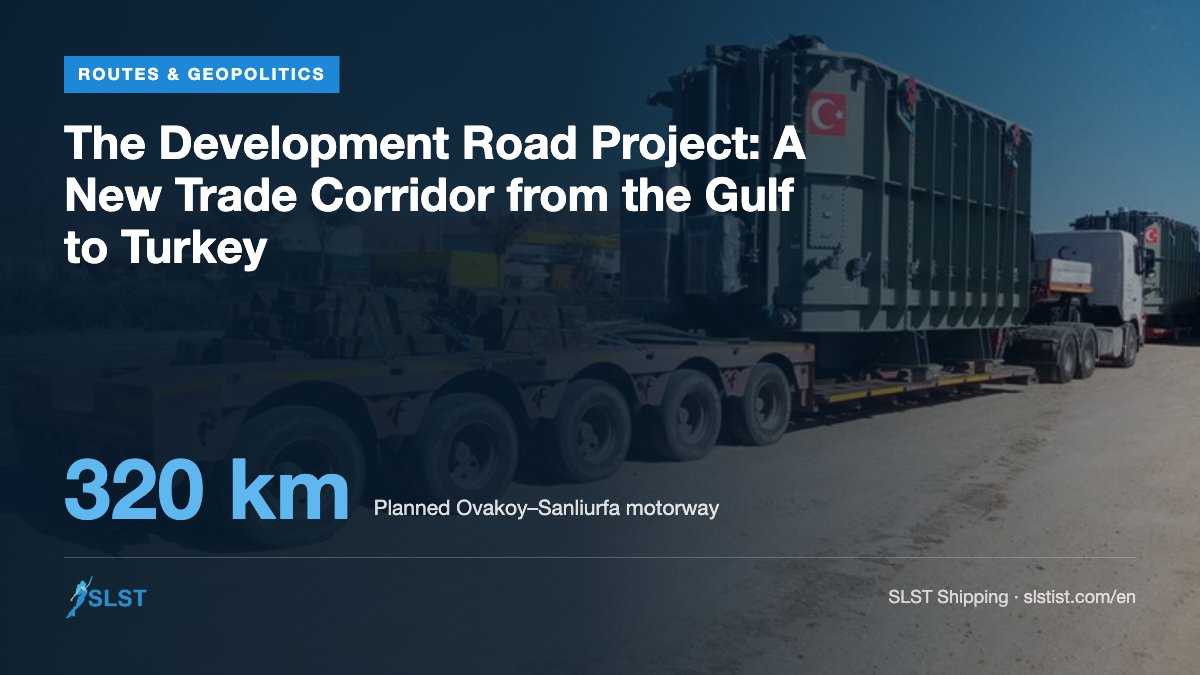
- Turkish connection: The corridor is planned to enter Turkey at the Ovakoy border point. According to Minister Uraloglu, a new motorway of about 320 km is planned from Ovakoy to Sanliurfa, with an investment cost of about $2 billion.
Developments in 2026
- Faw Port: In April 2026, Iraqi officials announced that the main infrastructure works at the port, including five berths, the navigation channel and a 62 km access road, had been completed.
- Ovakoy–Fishkhabour agreement: In July 2026, Turkey and Iraq reached an agreement on the Ovakoy–Fishkhabour link. Minister Uraloglu called it an important milestone and said the aim is to break ground this year, with financing and implementation steps to follow.
Timeline and cost: sources differ
Different figures are circulating for the project’s total cost and the completion dates of its phases. A range of $17–20 billion is commonly cited for the cost, and phase dates vary by source. For a definitive timeline, follow the official statements of Turkey’s Ministry of Transport and Infrastructure.
What could it mean for Turkish logistics?
- New cargo flows: If the corridor becomes operational, part of the Gulf-origin cargo could be carried through Turkey by road and rail.
- Port connections: Turkey’s Mediterranean and Black Sea ports could play a role in the corridor’s sea link to Europe.
- Construction phase: Motorway, railway and port construction creates demand for heavy equipment and project cargo transport.
Frequently asked questions
When will the Development Road be completed?
There is no definitive date. As of July 2026 the aim is to break ground this year; sources give different completion dates for the phases.
Can the Development Road replace the Suez Canal?
It is promoted as an alternative. Because it combines land and sea transport, the cost and time comparison will vary by type of cargo.
Sources
- Yeni Şafak: First groundbreaking for the Development Road this year (in Turkish)
- Gazete Birlik: Turkey and Iraq agree, Ovakoy becomes the new border gate (in Turkish)
- A Haber: First step targeted this year in the Development Road project (in Turkish)
- Rudaw: Faw Port infrastructure works (in Turkish)
- Yeni Şafak: Time to speed up at Ovakoy (in Turkish)
This article is based on sources published up to 26 October 2026.
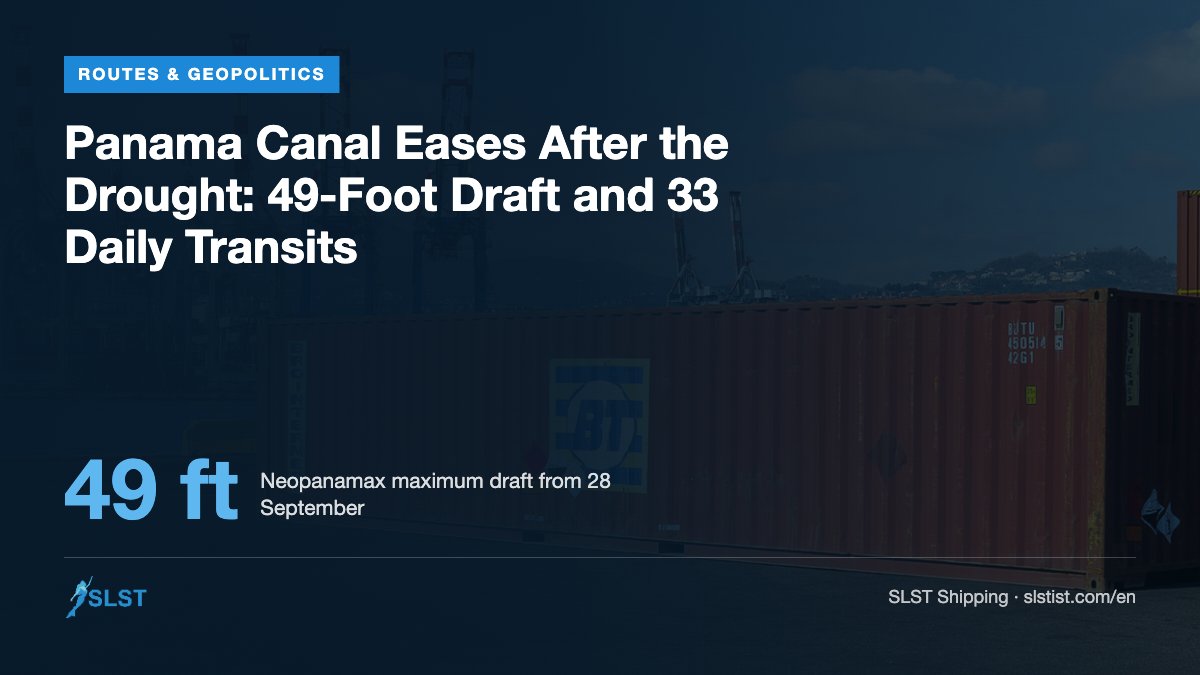
The Panama Canal is the shortest sea route between the Atlantic and the Pacific. Its locks are fed by Gatun Lake, which fills with rainwater. When the lake level falls, the canal has to limit ships’ draft and the number of daily transits. Summer 2026 was such a period.
Summer 2026: drought and restrictions
- According to the Panama Canal Authority, May–August rainfall was 34% below the historical average, and inflows to the watershed fell 44% below normal.
- The maximum permitted draft in the Neopanamax locks was cut from 49.5 feet in early July to 49 feet on 24 July and 48.5 feet on 15 August. Further cuts to 48 and 47.5 feet were postponed several times.
- Daily transits were capped at 34 ships from 4 September and 32 from 15 September. Until the end of June, the average was 35 transits a day.
End of September: relief
In an advisory published on 28 September, the Canal Authority eased the restrictions based on the current and projected level of Gatun Lake:
| New rule | |
|---|---|
| Neopanamax maximum draft | 14.94 m (49.0 ft), effective immediately until further notice |
| Neopanamax daily transits (from 15 October) | 10 |
| Total daily transit capacity (Neopanamax + Panamax) | 33 |
The 47.5-foot draft cut planned for 1 October was also cancelled. The canal reminded users that the booking system is the only way to guarantee a transit date and that vessels without a reservation may face long waits.
Traffic over the year
In the first ten months of fiscal year 2026, 10,623 deep-draft vessels passed through the canal, 6.1% more than the 10,010 transits in the same period a year earlier. The restrictions were concentrated in the summer months.
Why does it matter?
- Asia–US East Coast: When the canal is unavailable on this trade, ships divert to Suez or the Cape of Good Hope, changing the distribution of global fleet capacity.
- Dry bulk and LPG: Grain and LPG cargo from the US Gulf to Asia depends on the canal. Draft restrictions mean ships transit with less cargo.
- Freight: Every reduction in transit capacity increases waiting times and costs on the trades concerned.
Frequently asked questions
Why is draft restricted at the Panama Canal?
The locks run on fresh water from Gatun Lake. When rainfall drops, the lake level falls and the depth available for safe passage decreases.
Have the restrictions been fully lifted?
No. Draft was raised to 49 feet and daily capacity to 33 transits, but these values are below July levels. The Canal Authority says the watershed is still in deficit.
Sources
- Panama Canal Authority: Panama Canal announces increase in draft and daily transit
- AJOT: Panama Canal announces increase in draft and daily transit
- gCaptain: Panama Canal scraps planned October draft cut—for now
- Marine Link: Panama Canal to cap daily transits
- La Estrella de Panamá: Panama Canal raises transits to 33 and draft to 49 feet (in Spanish)
This article is based on sources published up to 26 October 2026.
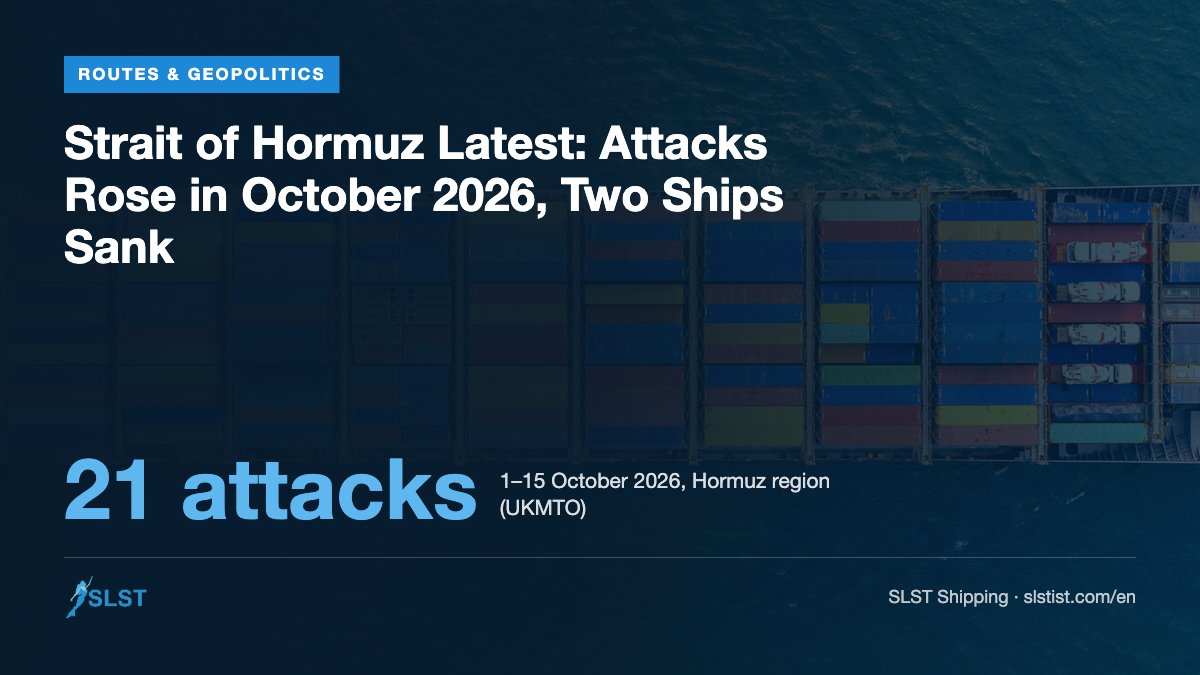
The Strait of Hormuz is the only sea route connecting the Persian Gulf to the open sea. Since the US–Iran war began in 2026, the number of ships passing through the strait has been far below pre-crisis levels. In October 2026, attacks on shipping increased markedly.
What happened in October 2026?
- Attacks: UK Maritime Trade Operations (UKMTO) recorded 21 attacks on vessels in the region between 1 and 15 October.
- Sinkings: The Singapore-flagged container ship GFS Pride was hit while transiting the strait, caught fire and sank. According to the Maritime and Port Authority of Singapore, all crew were evacuated. The bulk carrier Cape Dao also sank; it had first been hit on 23 September. One Indian crew member lost his life in that incident.
- Disputed cause: Iran said the ships struck mines on an “unauthorised route”. Maritime sources pointed to an unidentified projectile or a drone.
- Iran’s justification: Iran said it was stepping up attacks in response to the US blockade of Iranian ports and sanctions tightened in September.
Transit numbers
| Daily transits | |
|---|---|
| Pre-crisis average (Argus) | 138 |
| First weeks of the war (Argus) | 5 at most |
| 7 October 2026 (Windward) | 18 |
| 14 October 2026 (Windward) | 6 |
| 21 October 2026 (Windward) | 14 |
The figures come from different data providers with different counting methods. But the picture is clear: traffic fluctuates at a small fraction of pre-crisis levels.
The US statement
US Central Command (CENTCOM) commander Brad Cooper said on 26 October that the main transit routes in the strait are free of Iranian mines. According to CENTCOM, more than 3,000 ships have transited the strait with US support over the past six months. Iran, by contrast, says the strait is closed. Neither statement can be independently verified.
Insurance and cost
Ships entering a war zone need separate war risk insurance, and the premium is re-priced for each voyage. A World Economic Forum analysis from April 2026 describes how governments have stepped in as “insurers of last resort” as private insurers withdrew from the region. These premiums are passed on to Gulf cargo as a war risk surcharge.
Checklist for shippers to the Gulf
- Service status: Does the line still call directly at Gulf ports, or does it discharge cargo at a transshipment port?
- Surcharges: Is the war risk surcharge included in the quote, or will it be added later?
- Cargo insurance: Does your policy cover war and strikes risks? Confirm in writing with your insurer.
- Delivery term: The Incoterms rule determines where risk passes to the buyer. See Incoterms.
- Time buffer: Allow extra time for possible transshipment and waiting.
Frequently asked questions
Is the Strait of Hormuz closed?
Iran says the strait is closed; the US says the main routes are open and ships are transiting with US support. In practice, transits continue, but at numbers far below pre-crisis levels.
Who pays the war risk surcharge?
Surcharges usually fall on whoever pays the freight. This depends on the delivery term in your sales contract.
Sources
- Euronews: Another tanker catches fire near Hormuz after two cargo ships sunk in attacks (15 October 2026)
- US News / Reuters: Two ships sink near Hormuz after being hit by projectiles amid surge in attacks
- gCaptain: Containership sinks as Hormuz attacks spiral out of control
- Arab News: US touts role in Gulf oil exports as CENTCOM chief flies over Hormuz Strait
- Windward: Strait of Hormuz insights
- Argus: Traffic through Hormuz remains minimal
- World Economic Forum: What stopping war-risk insurance in the Strait of Hormuz tells us
This article is based on sources published up to 26 October 2026.
Since late 2023, attacks in the Red Sea have pushed most container lines to route Asia–Europe services around the Cape of Good Hope. As of October 2026 the picture is changing: container traffic through the Suez Canal is rising, but it has not yet returned to pre-crisis levels.
October 2026 in numbers
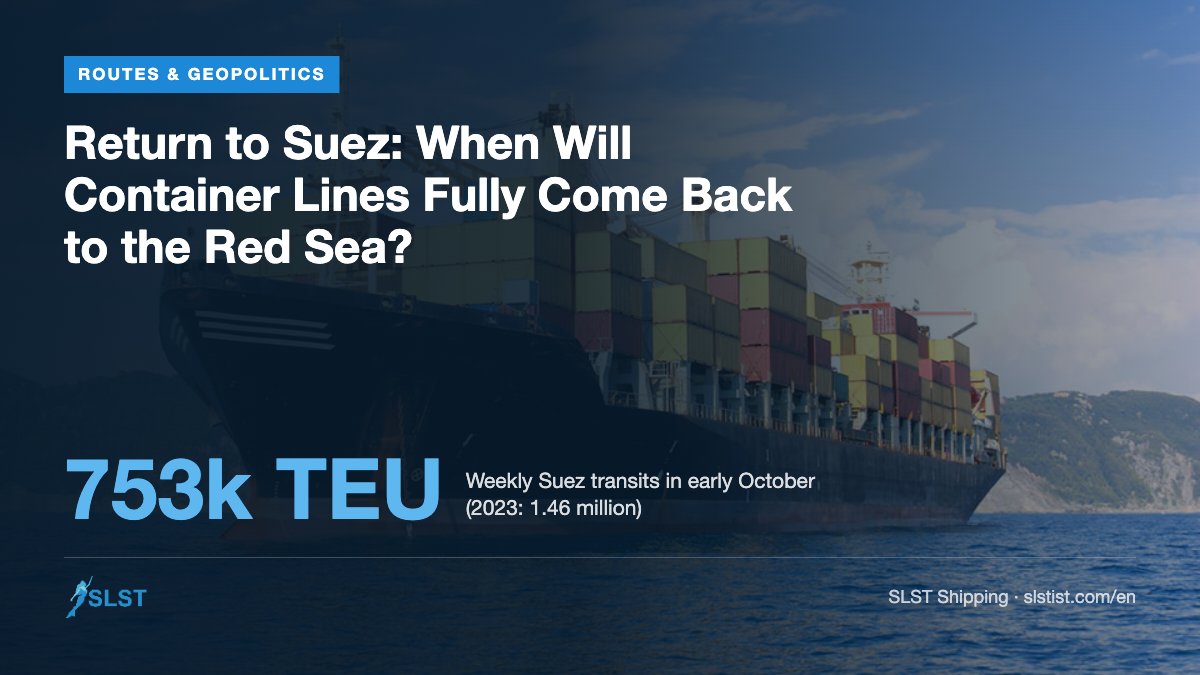
- Canal traffic: According to data reported by Maritime Executive, container ship capacity passing through Suez in early October was about 753,000 TEU per week. In 2023 the figure was about 1.46 million TEU per week. Traffic has passed the halfway mark, but is not fully back.
- Service share: According to Alphaliner, 63% of capacity on the Far East–Europe trade is now deployed on services using the Red Sea. On Mediterranean services the share is about 70%.
The higher share on Mediterranean services matters for Turkey: Eastern Mediterranean ports are among the regions that benefit most from the Suez route.
When will the return be complete?
Analysts’ forecasts are close to each other, but not certain:
- Linerlytica expects container lines to fully return to Suez in the first quarter of 2027.
- Drewry expects about 80% of capacity to be back on the Red Sea route by February.
Both forecasts depend on the security situation in the region. If tensions in and around the Red Sea (for example between Saudi Arabia and the Houthis) escalate again, the timeline may slip. Lines base their return decisions on insurance conditions and crew safety.
What changes for cargo to and from Turkey?
Transit time. The Cape route made sailings between Asia and the Mediterranean significantly longer. Services returning to Suez have shorter transit times. However, not every line or service returns at the same time; services arriving at the same port via two different routes may run in parallel for a while.
Schedules. A route change means lines rework their schedules. Delays and bunching of vessel arrivals at ports may occur during the transition. Global schedule reliability had fallen to 49.9% in August 2026 (see our schedule reliability article).
Freight rates. The Cape route tied up a large part of the world container fleet on longer voyages. As ships return to Suez, this capacity is released. Together with the record orderbook for new ships, this may put pressure on freight rates. In the short term, however, rates continue to fluctuate week to week.
Which questions should cargo owners ask?
- Does the service route via Suez or via the Cape of Good Hope?
- What is the estimated transit time and the transshipment port?
- Which surcharges (bunker, war risk, EU ETS, etc.) are added to the freight?
- How many days of free time are given at the destination port?
Frequently asked questions
Will the return to Suez lower freight rates immediately?
Not immediately. Analysts say the released capacity may put pressure on rates over time. During the transition, rates may fluctuate weekly. An up-to-date quote is needed for an exact price.
Are all lines returning at the same time?
No. The return is gradual and service by service. One service of a line may route via Suez while another still goes around the Cape.
Sources
- Seatrade Maritime: Full Suez return for container carriers expected by Q1 2027
- SAFETY4SEA: Alphaliner – 63% of Far East–Europe capacity on Red Sea services
- Maritime Executive: Suez Canal highlights continued return of containerships
This article is based on sources published up to 26 October 2026.